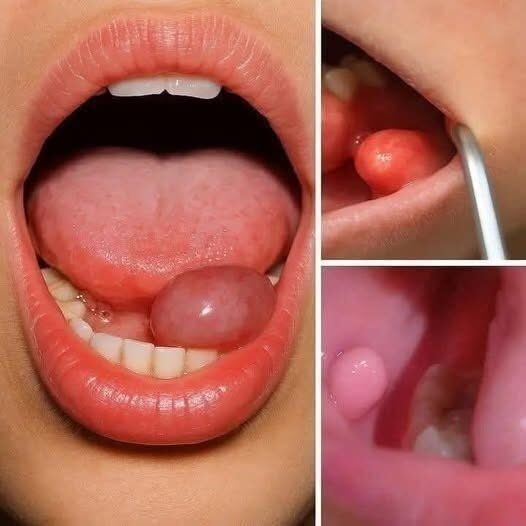
Discovering a new lump, bump, or sore inside your mouth can be alarming. The oral cavity is incredibly sensitive, meaning even a tiny change can feel massive to your tongue. While many oral lumps are completely benign and heal on their own, certain persistent symptoms require a professional evaluation to rule out more serious health conditions, including oral cancer.
Common and Mostly Harmless Causes
Before worrying, it helps to understand that the mouth is frequently exposed to minor trauma, bacteria, and irritation. Some of the most common everyday causes of oral bumps include:
- Canker Sores (Aphthous Ulcers): Small, painful ulcers that develop on the inner cheeks, lips, or under the tongue. They usually have a white or yellowish center with a red border and resolve within one to two weeks.
- Mucocele (Mucous Cyst): A harmless, fluid-filled swelling that typically forms on the inside of the lower lip. It happens when a tiny salivary gland becomes injured or blocked, often from accidentally biting your lip.
- Fibromas: Smooth, firm, skin-colored lumps caused by chronic irritation—such as a sharp tooth constantly rubbing against your cheek or a rough spot on dental braces.
- Oral Thrush: A fungal overgrowth that can cause raised, creamy white bumps on the tongue or inner cheeks, common in individuals with weakened immune systems or those using steroid inhalers.
When to Be Concerned: The Red Flags
Dental and medical professionals use a specific set of guidelines to determine if an oral lump requires a biopsy or urgent care. You should schedule an appointment with a dentist or doctor if you notice any of the following:
| Red Flag Symptom | Detail & Timeline |
| Persistence | Any lump, bump, or ulcer that does not heal or disappear within 14 days, even if it is completely painless. |
| Color Changes | Spots or patches inside the mouth that appear distinctly bright red, white, or a mixture of both (erythroplakia or leukoplakia). |
| Unexplained Bleeding | A lump or sore that bleeds easily when touched or without any clear cause. |
| Texture Changes | A patch of tissue that feels unusually hard, thick, or fixed in place rather than moving freely under the skin. |
| Functional Issues | Difficulty swallowing, chewing, moving your tongue, or a persistent feeling that something is caught in your throat. |
The Takeaway: The golden rule of oral health is simple: if it stays for more than two weeks, get it looked at. Dentists are trained to screen for oral abnormalities during routine cleanings, making regular checkups your best line of defense. Early detection of any underlying issue drastically improves treatment success.