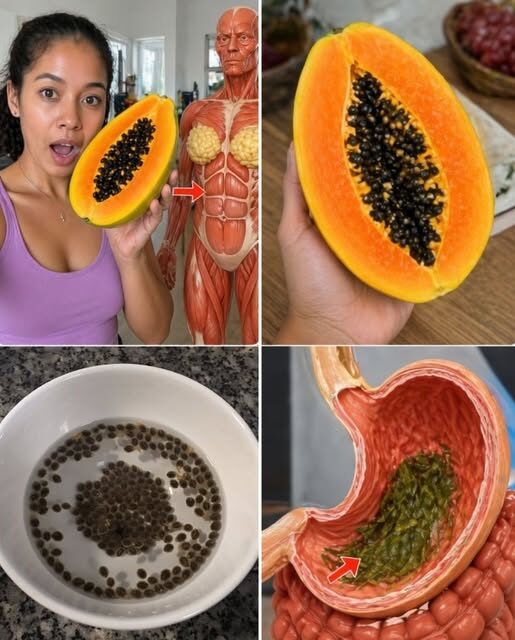
For decades, the standard culinary protocol for preparing a ripe papaya (Carica papaya) was entirely mechanical: slice the vibrant orange fruit in half, scoop out the gelatinous mass of dark, glistening seeds, and discard them directly into the compost bin. We treated the flesh as the prize and the seeds as mere structural waste.
However, a massive shift in molecular gastronomy and functional nutrition has turned this practice completely on its head.
Modern wellness kitchens are treating these tiny, dark spheres not as waste, but as a culinary goldmine. Packed with a distinct, sharply pungent flavor profile that mimics premium black peppercorns with a cross of fresh horseradish, papaya seeds are emerging as a powerful, bioavailable ingredient capable of elevating both your digestive health and your daily recipes entirely for free.
1. The Science: Inside the Molecular Profile of the Seed
To understand why papaya seeds are generating so much attention in health and culinary circles, we must examine their underlying biochemistry. The protective outer shell of the seed is designed to shield the plant’s reproductive blueprints, resulting in an incredibly dense concentration of specific enzymes and protective plant defenses.
When consumed in moderate, raw, or dried forms, these active elements offer several distinct physiological benefits:
- The Papain and Chymopapain Complex: These are highly powerful proteolytic enzymes (enzymes that break down proteins). They assist your digestive tract in smoothly cleaving complex animal and plant proteins into easily absorbable amino acids, significantly reducing bloating and post-meal sluggishness.
- Carpaine (An Exotic Alkaloid): A unique plant compound that studies suggest supports a balanced cardiovascular system and helps maintain a clean, resilient intestinal environment by creating an inhospitable terrain for harmful micro-organisms.
- Glucotropaeolin & Isothiocyanates: The exact same sulfur-rich compounds found in wasabi, horseradish, and broccoli sprouts. These molecules trigger the liver’s phase II detoxification pathways, helping the body neutralize free radicals caused by environmental pollution and processed lifestyle factors.
- High-Density Oleic Acid: The seeds contain a surprising amount of healthy monounsaturated fatty acids, which help soothe internal tissue inflammation while supporting smooth nutrient absorption across the intestinal lining.
2. Papaya Seeds vs. Black Peppercorns: A Strategic Comparison
Many chefs are completely replacing standard black pepper with dried papaya seeds due to their superior nutritional footprint and nuanced flavor notes.
| Feature / Metric | Standard Black Peppercorns | Upcycled Papaya Seeds |
| Primary Flavor Note | Sharp, biting heat driven by piperine. | Peppery, warm heat with an exotic, horseradish-like finish. |
| Enzymatic Activity | Minimal baseline digestive enzyme activity. | Extremely High: Packed with active proteolytic papain. |
| Waste Index | Cultivated specifically as a crop, requiring packaging. | Zero Waste: Upcycled directly from food leftovers. |
| Best Culinary Use | Universal seasoning for savory dishes. | Raw salad dressings, functional marinades, and steak rubs. |
| Digestive Impact | Can occasionally irritate sensitive stomach linings. | Actively soothes the stomach by accelerating protein breakdown. |
3. Step-by-Step: How to Harvest, Cure, and Store Papaya Seeds
Because raw papaya seeds contain a very high moisture content, they will spoil quickly if left on a counter. Follow this simple process to safely transform raw seeds into a shelf-stable, gourmet kitchen spice.
1.Extraction and Thorough Washing:Prerequisite Step.
Slice your ripe papaya in half. Using a sturdy metal spoon, gently scrape the dark clusters of seeds out of the central cavity. Place the seeds into a fine-mesh strainer and rinse them under cold, running water, using your fingers to firmly rub away the slippery, gelatinous outer membrane (the sarcotesta).
2.The Towel Press and De-Moisturizing:10 Minutes.
Dump the clean, wet seeds onto a flat layers of unbleached paper towels or a clean microfiber cloth. Press down firmly with another towel to absorb all surface moisture. The cleaner and drier the surfaces of the seeds are, the faster they will cure.
3.The Curing and Dehydration Phase:Choose Method A or B.
Method A (Air Dry): Spread the seeds out in a single layer on a parchment-lined baking sheet and place them in a dry, well-ventilated room for 3 to 5 days.
Method B (Oven Method): Place the baking sheet into an oven set to its lowest possible temperature (around 110–130°F or 45–55°C) for 2 to 4 hours, stirring occasionally until they are completely hard and wrinkled.
4.The Spice Grinder Transition:Final Step.
Once the seeds are completely dry and brittle to the touch, transfer them into a standard manual pepper mill or a clean glass spice jar. Store them in a cool, dark pantry away from direct sunlight. They will maintain their flavor and potency for up to six months.
4. 3 Gourmet Ways to Integrate Papaya Seeds Into Your Daily Routine
The Clean-Green Wellness Vinaigrette
A vibrant, zesty dressing that uses the natural emulsifying properties and peppery kick of raw papaya seeds to balance out leafy greens.
- Ingredients: 1 tablespoon of raw, fresh papaya seeds, ¼ cup of extra virgin olive oil, 2 tablespoons of raw apple cider vinegar, 1 tablespoon of fresh lemon juice, 1 teaspoon of raw honey, and a pinch of sea salt.
- Preparation: Combine all ingredients into a high-speed blender and process until smooth. The seeds will break down completely, giving the dressing a beautiful speckled appearance and a warm, complex bite.
The Ultimate Digestive Enzyme Shot
A concentrated morning elixir designed to kickstart your stomach acid production and prime your liver for optimal daytime metabolism.
- Ingredients: 1 cup of filtered water, a 1-inch slice of fresh ginger root, ½ teaspoon of dried, ground papaya seeds, and the juice of half a lime.
- Preparation: Simmer the ginger in water for 5 minutes, strain into a cup, stir in the ground papaya seeds and fresh lime juice, and drink warm 15 minutes before your main meal.
The Eco-Friendly Steak & Tofu Rub
Because the papain enzymes inside the seeds naturally break down tough protein fibers, this rub doubles as an incredible, all-natural meat tenderizer.
- Ingredients: 2 tablespoons of freshly cracked dried papaya seeds, 1 tablespoon of garlic powder, 1 tablespoon of smoked paprika, and 1 teaspoon of coarse sea salt.
- Preparation: Mix the spices thoroughly and rub them generously onto your protein of choice (beef, chicken, or firm tofu) 30 minutes before grilling or pan-searing.
A Note on Safe Consumption: Because papaya seeds are highly concentrated and contain the alkaloid carpaine, moderation is key. A safe, highly effective baseline dose is 1 to 2 teaspoons of seeds per day. If you are currently pregnant, nursing, or have a highly sensitive gastrointestinal condition, always check with your healthcare provider before introducing any highly dynamic botanical remedy into your daily routine.