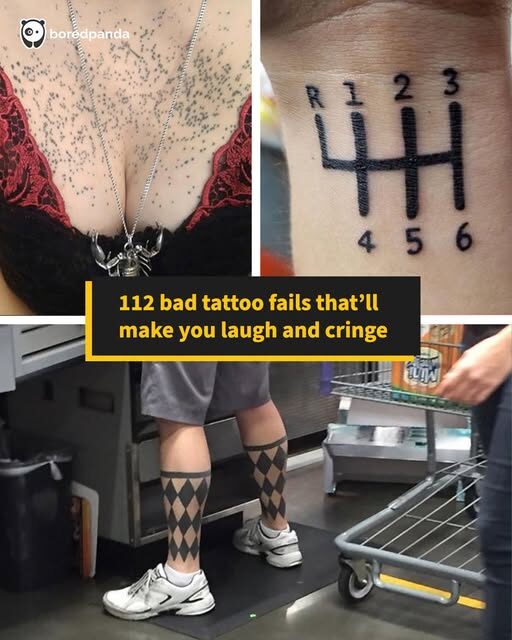

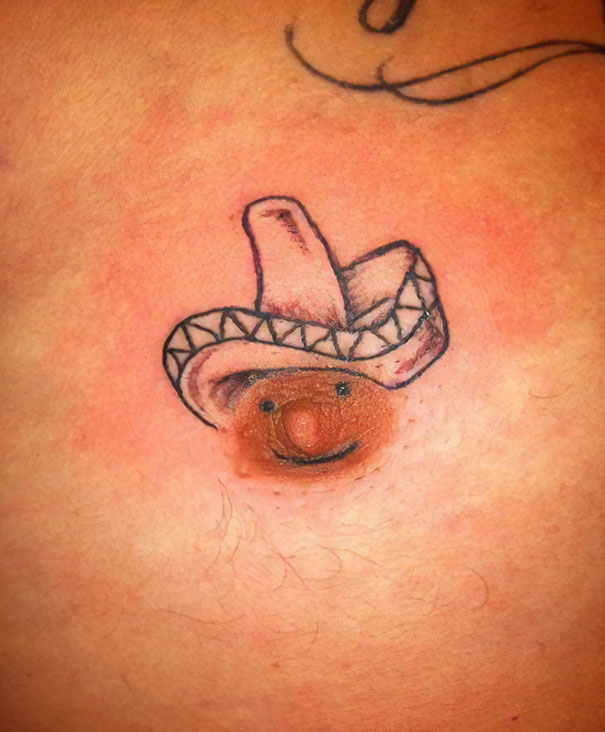
Tattoos are designed to be the ultimate form of permanent self-expression—a living canvas of personal milestones, artistic tastes, and deep philosophical beliefs. Yet, as the internet’s most viral galleries consistently show, the line between a breathtaking masterpiece and an absolute aesthetic catastrophe is incredibly thin.
From misspelled motivational quotes and distorted animal portraits to anatomically impossible designs, permanent ink disasters are a staple of internet culture. But looking past the initial laughter reveals a fascinating study of human psychology, anatomical physics, and the complex reality of trying to fix a mistake written permanently into the skin.
1. The Anatomy of a Tattoo Fail: Why Ink Goes Wrong
When a tattoo turns into a disaster, it is rarely just a matter of a ugly drawing. Creating permanent body art is a highly technical, medical-grade procedure that requires precise depth control and specialized equipment.
When things go wrong, it is typically driven by specific mechanical or biological failures:
- Ink Blowouts: This occurs when an inexperienced artist presses the needle too deeply, passing right through the epidermis (outer skin layer) and entering the subcutaneous fat layer below. Because fat tissue lacks the tight structure of skin, the ink bleeds outward chaotically, creating a messy, blurry halo effect around what should have been a clean line.
- Poor Spatial Mapping (Anatomical Distortion): A design that looks perfect on a flat sheet of paper will warp dramatically when applied to a curved, moving human muscle. Fails often happen when an amateur artist fails to map the stencil while the client is standing in a natural position, resulting in portraits that twist into terrifying caricatures whenever the person bends their arm or leg.
- The Dunning-Kruger Effect in Art: Many viral disasters are born in informal “kitchen studios” where scratchers—unlicensed, self-taught individuals—underestimate the immense technical skill required to shade, pull steady lines, and blend color gradients properly on living, elastic tissue.
2. Categorizing the Classic Red Flags of Permanent Ink
| The Tattoo Category | The Creative Oversight | The Tragic (and Hilarious) Result |
| The Wordplay Trap | Complete lack of spellchecking or basic grammatical review before the needle hits the skin. | Motivational mantras misspelled (e.g., “No Regerts”, “Tradgidy”), turning inspiration into a permanent joke. |
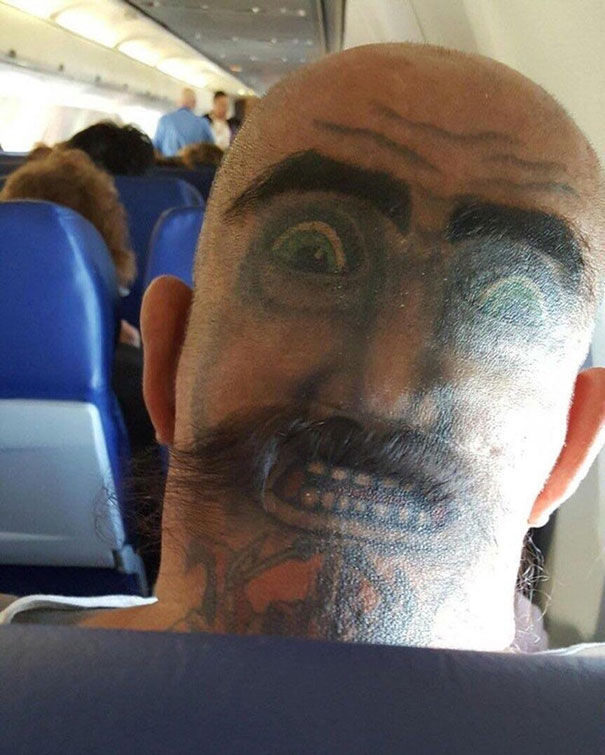
| The “Budget” Portrait | Attempting complex hyper-realism or human faces using a low-tier artist with zero training in anatomy. | Beloved family members or iconic celebrities looking like melted wax figures or characters from a horror movie. |
| Google Translate Roulette | Copy-pasting foreign scripts (Chinese characters, Sanskrit, or Arabic) without checking with a native speaker. | A beautiful symbol meant to mean “strength” or “freedom” actually translating to “chicken noodle soup” or “open window.” |
| The Perspective Glitch | Blindly replicating an online trend or optical illusion without matching it to the body’s natural movement lines. | Animals with an accidental extra limb, or symmetrical designs that sit entirely crooked on the chest or back. |
3. Step-by-Step: The “Think Before You Ink” Safety Protocol
Avoiding a spot on a viral internet list requires strict preparation. If you are planning a new piece, follow this definitive procedural checklist to protect your skin and your pride.
1.Audit and Vett Your Potential Artist:Month 1.
Never walk into a random studio based on cheap pricing. Spend weeks auditing portfolios on social platforms. Look specifically for clear, high-resolution videos of healed work, not just freshly oiled photos taken right after the session. Make sure their specific style (e.g., Traditional, Realism, Fineline) perfectly matches your design goal.
2.Perform a Rigorous Stencil Spellcheck:Week 1.
When the artist shows you the final digital drawing, check every single letter, dot, and line. If it features text in a foreign language, send the design to a native speaker to verify the context. Read the words backward, forward, and aloud.
3.Verify the Dynamic Placement:Day of Session.
The artist will apply a purple carbon stencil to your skin. Do not sit down. Stand up naturally in front of a full-length mirror. Move your limbs, walk around, and look at the placement from multiple angles. If the design shifts into an awkward shape when you relax your posture, ask the artist to wipe it off and reposition it.
4. The Painful, Costly Reality of the Fix
Once a terrible tattoo is under your skin, your options for fixing it are limited, physically demanding, and highly expensive. The human body’s immune system naturally locks tattoo pigments in place inside macrophage cells, making total removal an uphill battle.
Option A: The Cover-Up Strategy
A true master cover-up artist doesn’t just paint over an old tattoo; they use the existing dark lines as shadows inside a brand-new, significantly larger, and darker design. This requires intense knowledge of color theory, as you cannot place a light yellow or soft pastel tone directly over a heavy black mistake without the old image bleeding through within a year.
Option B: Laser Removal Technology
Modern Q-switched and Picosecond lasers use hyper-fast light pulses to superheat and shatter the trapped ink particles into microscopic dust fragments. Your lymphatic system then slowly filters these fragments out of your body over several months. However, laser removal is widely considered significantly more painful than getting the actual tattoo, requires between 5 to 12 separate sessions spaced weeks apart, and can easily cost thousands of dollars.
The Permanent Takeaway: Good tattoos are rarely cheap, and cheap tattoos are rarely good. The internet’s endless supply of viral tattoo fails should serve as a cautionary tale for us all. Treat your skin with respect, pay for genuine expertise, and remember: spellcheck is entirely free, but laser removal certainly isn’t.