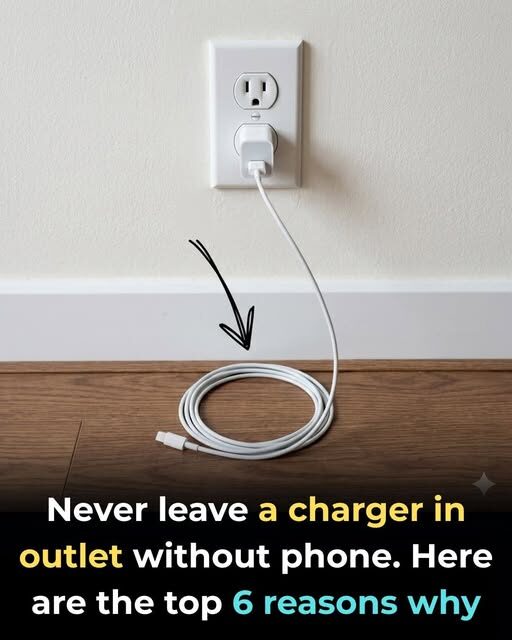
Many people unplug their phones after charging but leave the charger connected to the wall outlet. While this may seem harmless, experts say there are several reasons why it may be better to unplug your charger when it’s not in use.
1. It Can Still Use Electricity
Even when no device is connected, most chargers continue to draw a small amount of power. The energy consumption is usually minimal, but over time it can add up.
2. Chargers May Generate Heat
Quality chargers are designed to operate safely, but some can become slightly warm while plugged in. Excessive heat, especially in older or low-quality chargers, may affect performance and longevity.
3. Power Surges Can Cause Damage
Electrical surges caused by storms, faulty wiring, or grid fluctuations can damage electronic devices. A charger left plugged in remains exposed to these unexpected voltage spikes.
4. There Is a Small Fire Risk
Although uncommon, damaged or poorly manufactured chargers can overheat and pose a fire hazard. This risk increases if the charger is old, worn out, or made with low-quality components.
5. Continuous Power Exposure May Reduce Lifespan
Electronic components naturally wear down over time. Keeping a charger constantly connected to power may contribute to gradual deterioration of its internal circuitry.
6. Unplugging Is a Good Safety Habit
Removing chargers from outlets when they are not needed is a simple habit that can improve household safety. It also helps reduce unnecessary energy use and minimizes potential electrical risks.
The Bottom Line
Modern, high-quality chargers are generally safe and consume very little electricity when idle. However, unplugging them when not in use can help conserve energy, protect against power surges, and reduce long-term wear. For older or damaged chargers, unplugging is especially recommended.